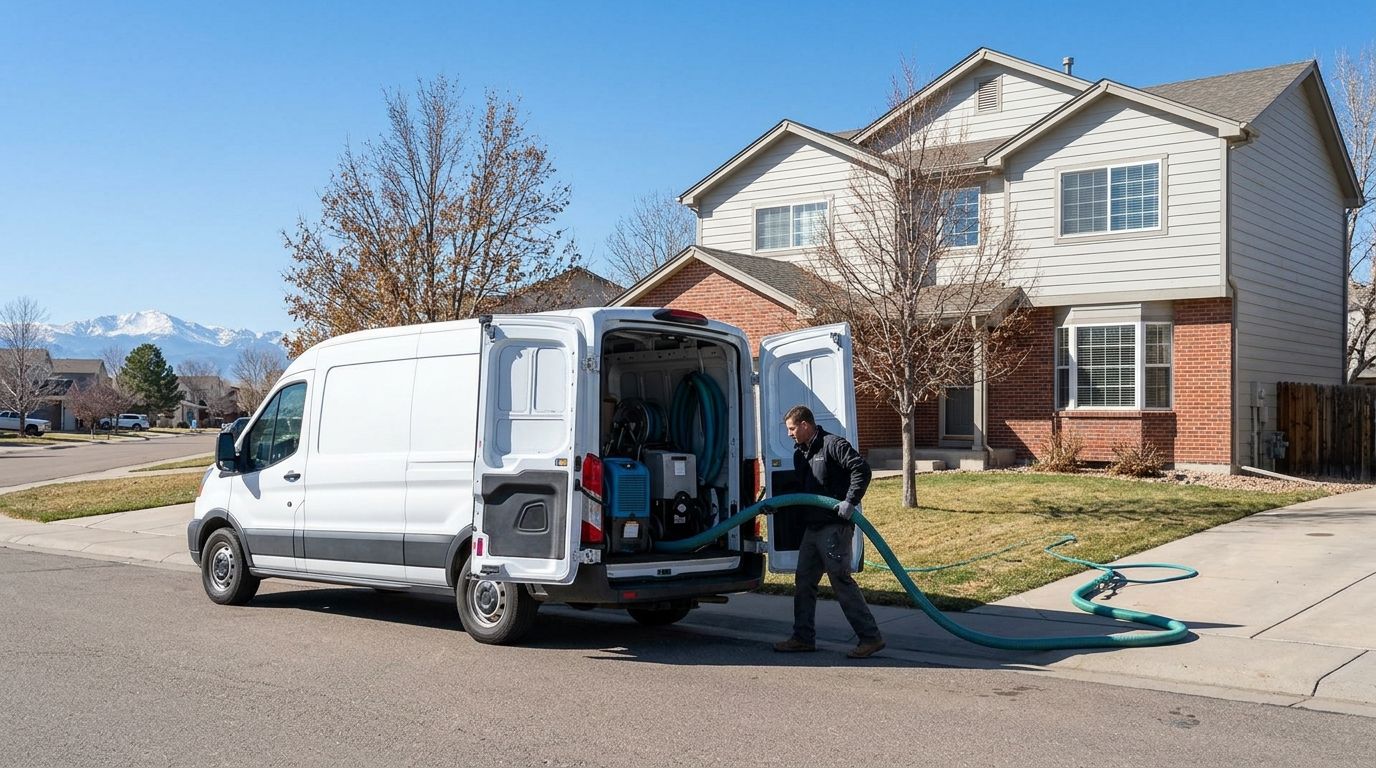
Quick dispatch reaches Evans neighborhoods along US-85, 37th Street, and 23rd Avenue.
Local Sewage Response Across Evans (80620)
Sitting directly south of Greeley along US-85, 37th Street, and the South Platte River, Evans blends established 1950s and 1960s residential blocks near downtown with newer master-planned neighborhoods like Tuscany and Ashcroft Heights. That contrast creates two distinct sewage emergency profiles inside ZIP 80620.
Older streets near the river corridor often carry aging cast-iron and clay side sewers prone to rust scale, soil settling, and mature tree roots. Newer subdivisions to the west feature finished basements where a single main-line backup ruins carpet, drywall, and base trim within hours. Connected to our Greeley sewage cleanup hub, independent local crews dispatch quickly along US-85 and 37th Street with full extraction gear.
Common Cleanup Needs in Evans Homes
Finished basement floor-drain backups: Rapid basement sewage cleanup including clean 12-to-24-inch drywall flood cuts and concrete scrubbing.
Older cast-iron lateral overflows: Immediate containment and toilet and sewer line overflow care before black water reaches hallway flooring.
The moment a downstairs tub gurgles or a basement drain overflows, stop running washers, dishwashers, and toilets right away. Shut off your furnace blower so basement odors do not drift upstairs, stay off wet floors near electrical outlets, and call our 24/7 dispatch line for immediate extraction.
Why do older cast-iron sewer lines near the South Platte River back up in Evans?
Post-war and 1950s-1960s homes near downtown Evans often have aging cast-iron drain lines that develop interior rust scale and shifted joints in river-valley clay soil, catching paper and roots until waste backs up indoors.
How fast can a cleanup crew reach Evans along US-85?
Evans borders South Greeley directly along US-85 and 37th Street, allowing local restoration teams to respond quickly day or night across ZIP 80620.
How Greeley Crews Restore Flooded Homes
Standing wastewater damages basement drywall and wooden framing fast. Local teams work through three clear phases to make your lower level clean and dry again.
PHASE 1
Isolate the Spill Zone
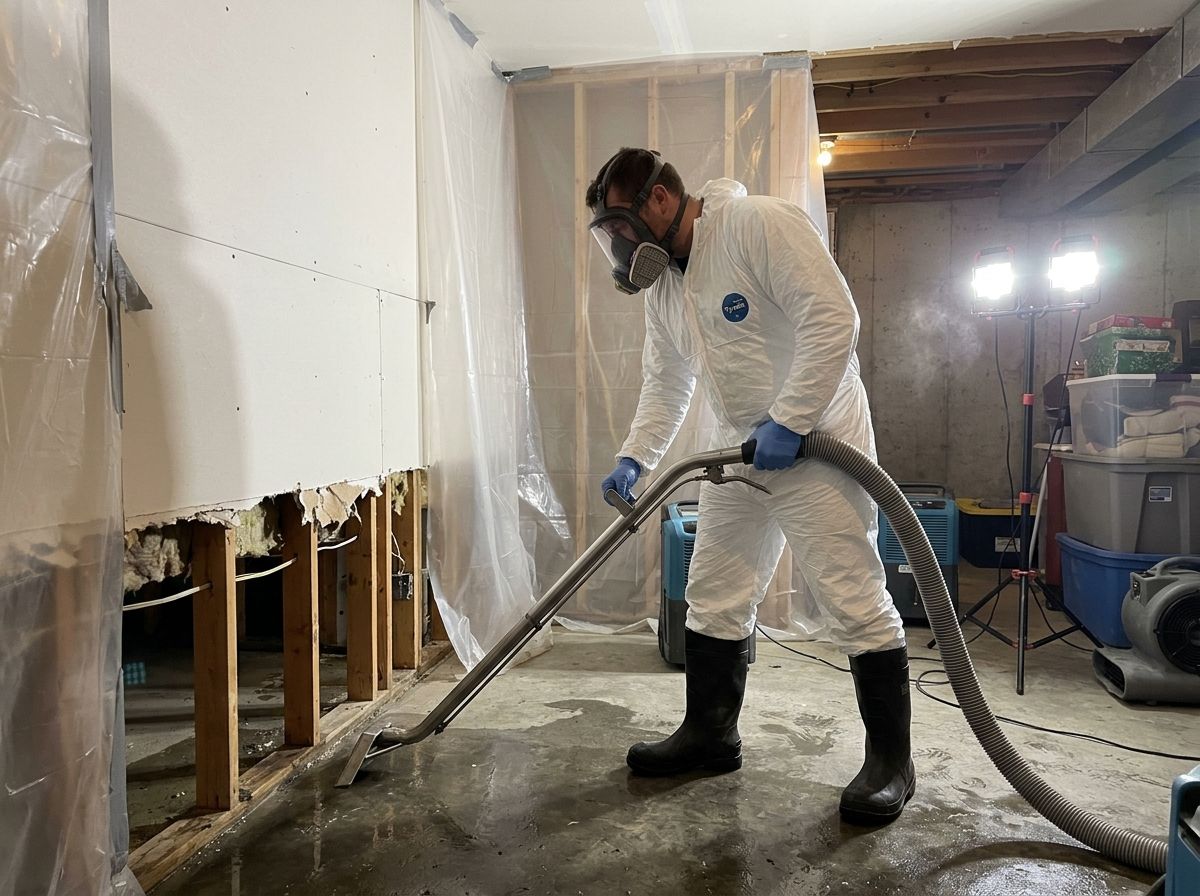
Crews hang heavy poly sheeting around wet rooms and shut down furnace airflow so sewer gases stay out of upstairs bedrooms.
PHASE 2
Pump Waste & Flood-Cut Walls
High-powered vacuum trucks remove liquid and sludge. Technicians haul out ruined carpet pad and cut wet drywall 12 to 24 inches above the water line.
PHASE 3
Scrub, Filter & Dry Framing
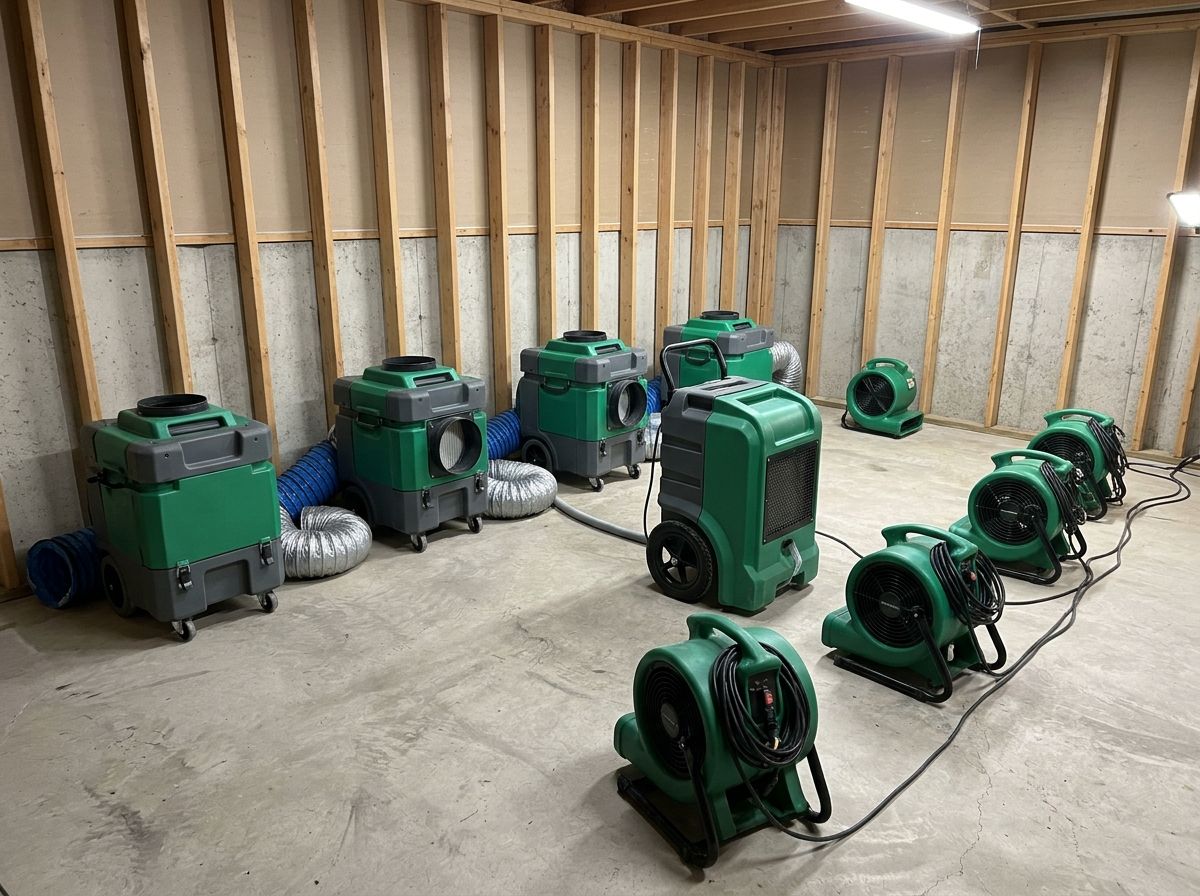
Concrete and studs get EPA-registered antimicrobial scrubbing. Air scrubbers and commercial dehumidifiers run until moisture meters read dry.
Poly containment barriers and 12-to-24-inch drywall flood cuts open wet studs for drying.HEPA air scrubbers and axial fans clear airborne odors and dry exposed basement framing.