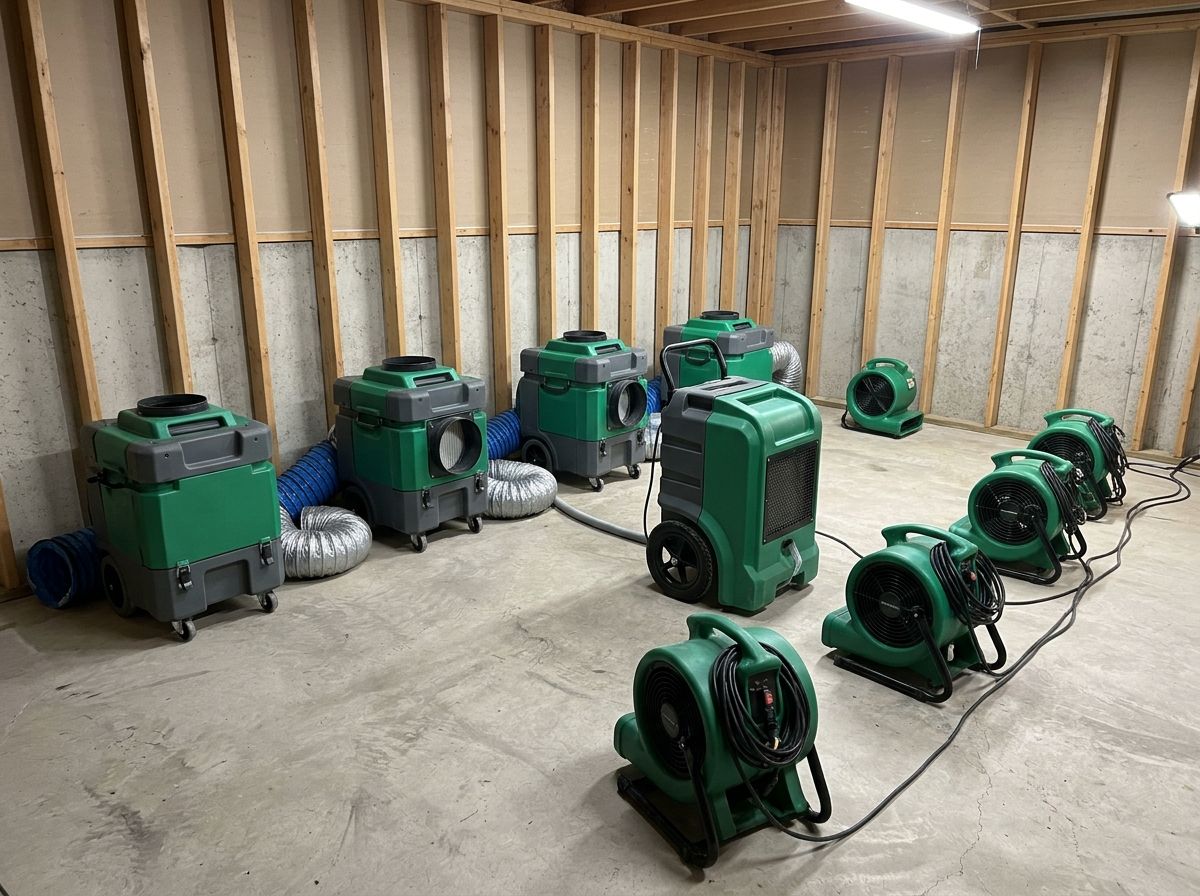
Commercial HEPA scrubbers and low-grain dehumidifiers dry Loveland basements before mold takes hold.
Covering Downtown Loveland, Lake Loveland, and Centerra
Stretching west from I-25 along US-34, Loveland spans both historic central neighborhoods around Lake Loveland and Fourth Street alongside newer eastern developments near Centerra and Boyd Lake. Older central blocks in 80537 and 80538 frequently deal with tree-root clogs in aging clay sewer laterals, while eastern corridors face heavy summer storm runoff pressure against basement drains.
Connected to our Greeley sewage cleanup dispatch network, independent local restoration crews travel US-34 and I-25 day and night to stop Category 3 black water before it ruins subfloors and cabinetry.
Local Cleanup Services Across 80537 and 80538
Tree-root basement backups: Full basement sewage cleanup for older brick bungalows and ranch homes near Lake Loveland.
Stormwater and pipe bursts: Fast truck-mounted emergency water extraction followed by thermal moisture mapping and commercial drying.
Why Fast Structural Drying Matters in Loveland
Even after visible puddles disappear, trapped moisture behind basement paneling or under vinyl plank flooring can trigger lingering sewer odors and secondary mold growth. Responding technicians verify dry wood and concrete readings daily before wrapping up equipment.
How quickly can crews reach Loveland along the US-34 and I-25 corridor?
Direct access along US-34 and I-25 allows local restoration teams to dispatch quickly across both 80537 and 80538, covering Centerra, downtown Loveland, and neighborhoods around Lake Loveland.
How do technicians prevent mold after a basement sewage spill in Loveland?
Mold begins growing on damp drywall and wood within 24 to 48 hours. Crews extract bulk water immediately, remove soaked porous materials, apply EPA-registered antimicrobials, and run commercial dehumidifiers until moisture meters confirm dry framing.
How Greeley Crews Restore Flooded Homes
Standing wastewater damages basement drywall and wooden framing fast. Local teams work through three clear phases to make your lower level clean and dry again.
PHASE 1
Isolate the Spill Zone
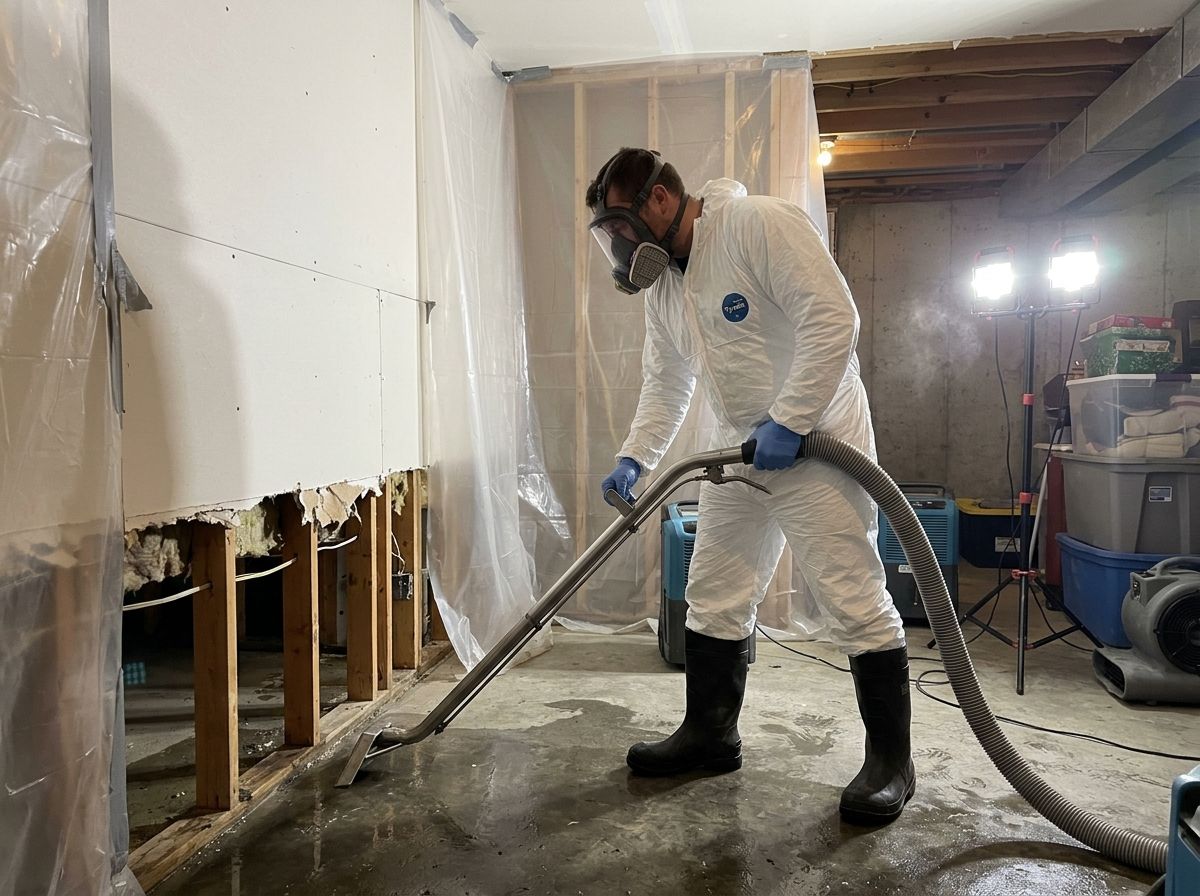
Crews hang heavy poly sheeting around wet rooms and shut down furnace airflow so sewer gases stay out of upstairs bedrooms.
PHASE 2
Pump Waste & Flood-Cut Walls
High-powered vacuum trucks remove liquid and sludge. Technicians haul out ruined carpet pad and cut wet drywall 12 to 24 inches above the water line.
PHASE 3
Scrub, Filter & Dry Framing
Concrete and studs get EPA-registered antimicrobial scrubbing. Air scrubbers and commercial dehumidifiers run until moisture meters read dry.
Poly containment barriers and 12-to-24-inch drywall flood cuts open wet studs for drying.HEPA air scrubbers and axial fans clear airborne odors and dry exposed basement framing.